Decoding Brazil's Real Estate Resilience Under Double-Digit Rates
At a Glance
The Chamber of Deputies' approval of the constitutional amendment (PEC) abolishing the 6x1 labor scale on May 27, 2026, indicates a material structural shift in the Brazilian labor framework, implementing a 40-hour weekly cap and a mandatory two-day rest period without any nominal wage reduction.
This transition suggests an expressive distributive conflict, projecting an estimated R$ 158 billion cost adjustment for corporate payrolls and a 10% baseline increase in hourly labor costs ; this inflationary pressure may compress the space for monetary easing, potentially anchoring the Selic rate at 14.50%.
With the text now proceeding to the Senate, the systemic variable shifts to the Upper House, where senators may condition their support on assertive fiscal compensations (such as employer FGTS cuts), a dynamic that suggests a continuous liquidity risk for the federal budget and a possible expansion of the sovereign risk premium.
THE MACRO ANALYSIS (THE CATALYST)
Traditional macroeconomic textbooks dictate a strict rule: a prolonged restrictive monetary policy is the natural executioner of capital-intensive sectors. With the Central Bank of Brazil (BCB) maintaining the terminal Selic rate locked in a punitive range of 13.50% - 14.50% to anchor core inflation, conventional financial models would price in a systematic freeze of new construction starts and a violent credit contraction in the real economy.
However, empirical data tells a completely antithetical story. Consolidated historical data demonstrates that the primary Brazilian real estate market is not simply surviving the monetary tightening: it is recording structural records in terms of sales volumes and price appreciation. This profound misalignment introduces a fundamental Variant Perception for global capital allocators: the Brazilian real estate matrix has developed a systemic immunity to traditional interest rate shocks.
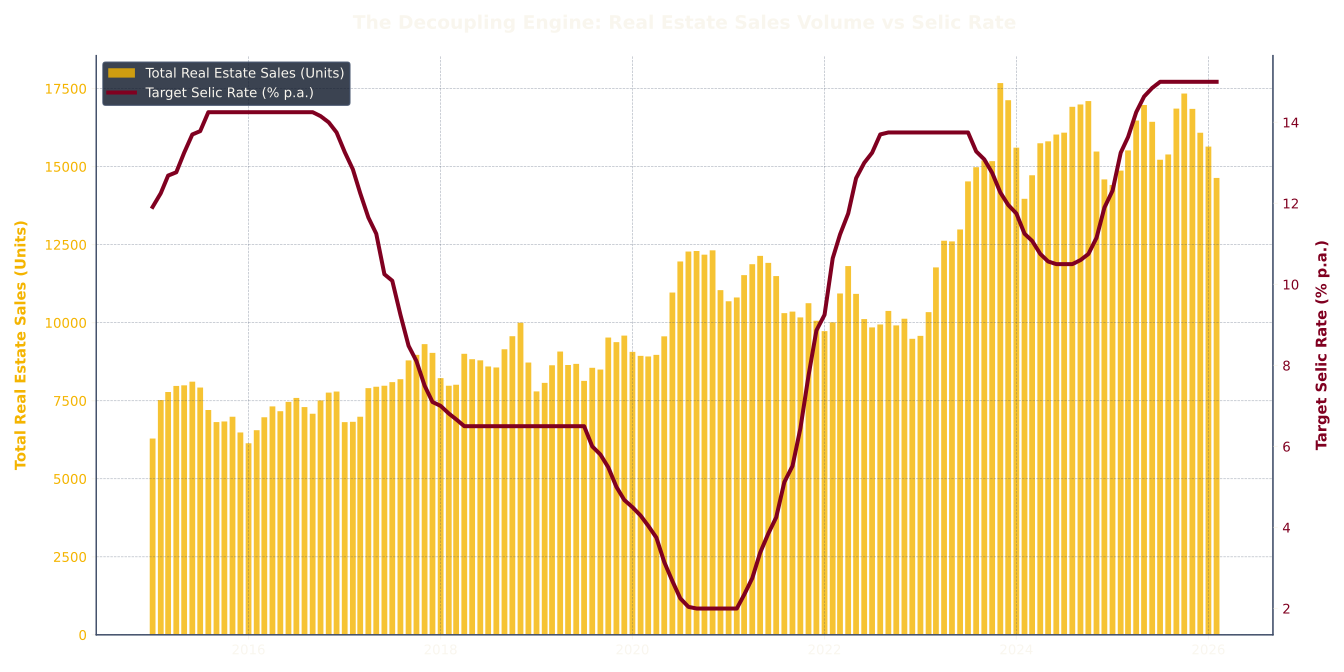
Figure 1: Historical alignment of monthly real estate sales volume against the BCB’s Selic Target Rate, demonstrating structural decoupling during the current monetary tightening cycle.
FLOW ANALYSIS: THE PILLARS OF RESILIENCE
1. The Subsidized Funding Shield (The Government as a Market Maker)
The main driver of volume resilience is a clear partition in credit origination. Traditional bank mortgages (SBPE - Sistema Brasileiro de Poupança e Empréstimo), which rely on local savings accounts, have indeed slowed down due to the double-digit cost of capital.
Conversely, the base of the real estate pyramid is completely insulated. In practical terms, the Brazilian federal government acts as a lender of last resort and a true market maker, directly financing and supporting the absolute majority (historically between 60% and 75%) of primary transactions in the country.
Through the FGTS (Fundo de Garantia do Tempo de Serviço), a gigantic pool of private capital derived from mandatory worker contributions (a liquid severance fund) but centralized and managed by the State as a pension and development fund, the government fuels the social housing program (MCMV - Minha Casa, Minha Vida). This mechanism allows the provision of credit at heavily subsidized rates ranging between 4.0% and 8.0% annually. Since this system effectively replaces private capital with stable and ring-fenced government liquidity lines, the overall sales volume remains strongly protected from the Selic’s trajectory.
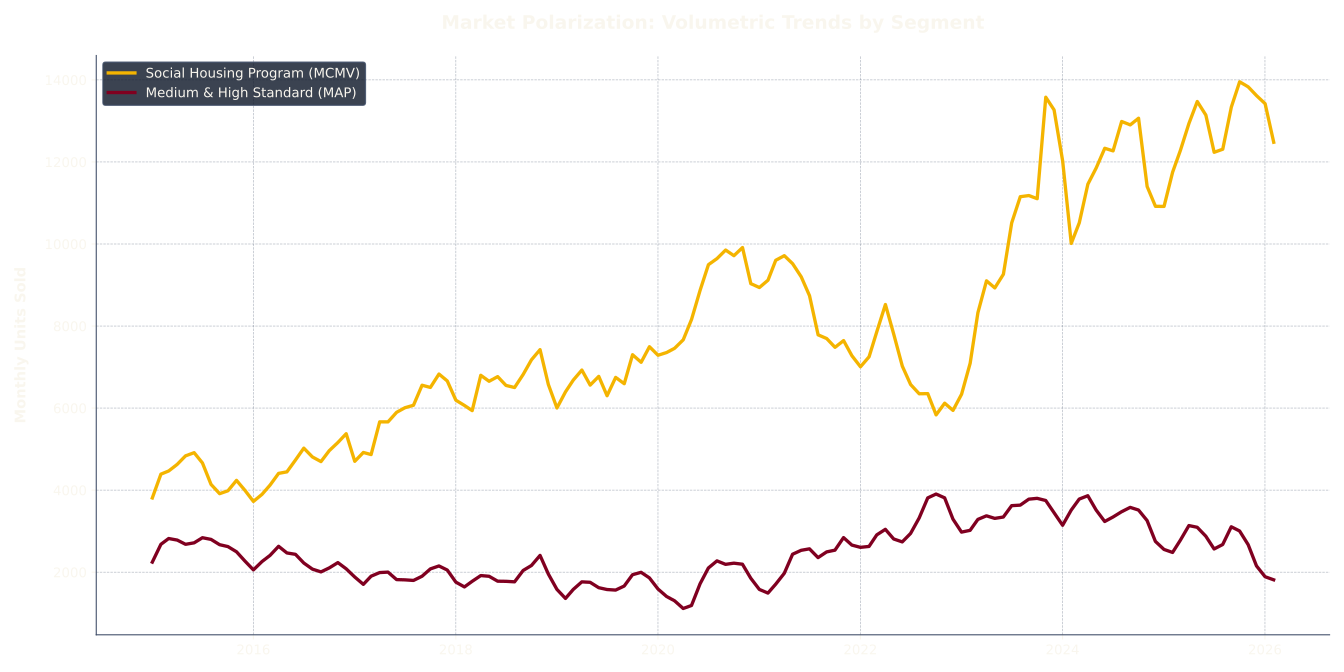
Figure 2: Structural divergence and polarization between social housing volume (MCMV), protected by public liquidity lines, and the medium-high standard index (MAP), which is more affected by ordinary credit contraction.
2. The Micro Mechanism: FGTS Withdrawals as “Equity Leverage” (Dar Entrada)
From a microeconomic perspective, the true structural anomaly lies in the forced liquidity of the worker. In Brazil, employers deposit 8% of the monthly salary into a restricted FGTS account. Under normal circumstances, these funds are locked; however, legislation allows their withdrawal to finance the down payment (dar entrada) or amortize the balance of a residential property.
In a regime of prohibitive commercial interest rates, this dynamic generates two systemic impacts:
Lowering the barrier to entry: It allows families to cover the initial equity requirement (usually 20%) without draining liquid savings or resorting to expensive personal loans.
Liquidating indexed debt: Workers use FGTS flows accumulated every two years to reduce the principal balance or pay up to 80% of the monthly installment, neutralizing the interest capitalization driven by the Selic.
3. The Equity Liquidity Shield (The Luxury Arbitrage)
Within the Medium and High Standard segment (Médio e Alto Padrão - MAP), faced with punitive bank spreads, High-Net-Worth Individuals (HNWIs) and institutional allocators are shifting their capital from volatile private credit instruments into premium real estate, viewed as a protective hard asset.
Consequently, transactions in São Paulo’s luxury residential districts are increasingly executed in pure equity (cash buyers) or through direct short-term financing with the developer indexed solely to construction costs (INCC), neutralizing the impact of standard bank mortgages.
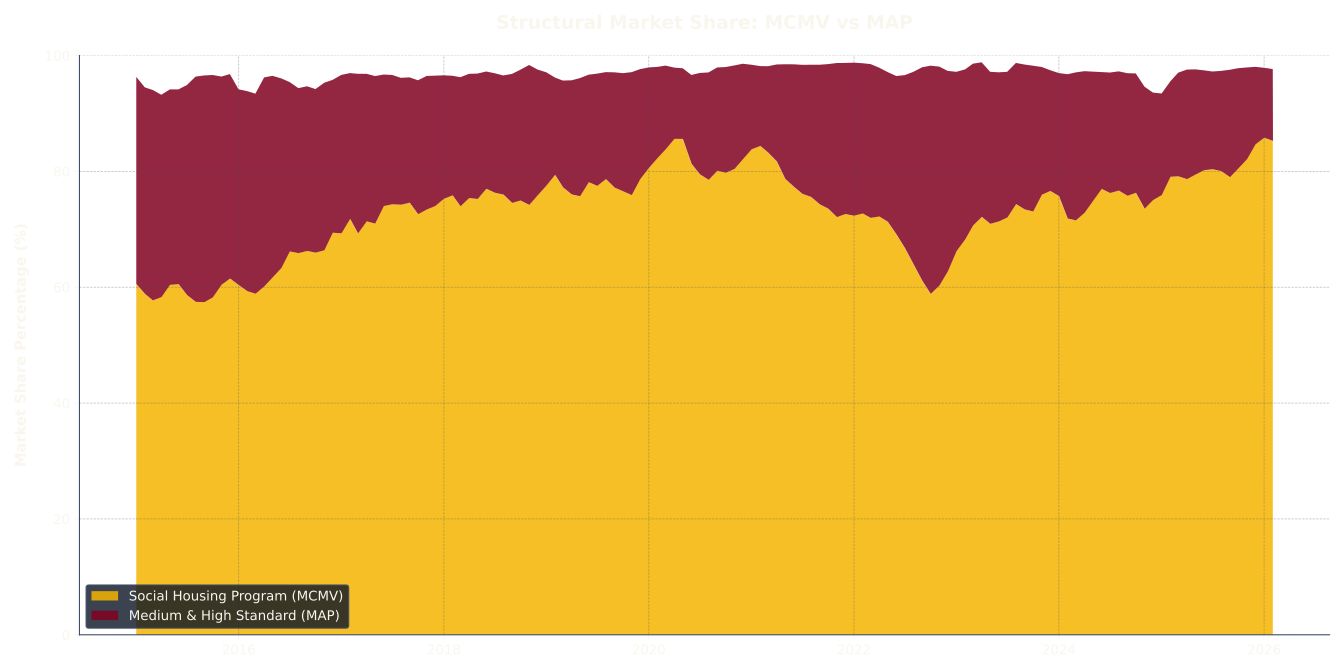
Figure 3: Dissection of funding flows in the Brazilian primary market. Transition towards a matrix dominated by alternative capital (public subsidies, FGTS leverage, and cash purchases).
THE DEMOGRAPHIC SHIELD: THE GRAVITATIONAL PULL OF DEMAND
The second pillar of the Variant Perception lies in a structural dynamic that traditional macro-financial models tend to underestimate: the pressure of the demographic dividend. Historical price analysis reveals a market where household formation generates a gravitational pull on demand capable of absorbing the depressive effect of high rates.
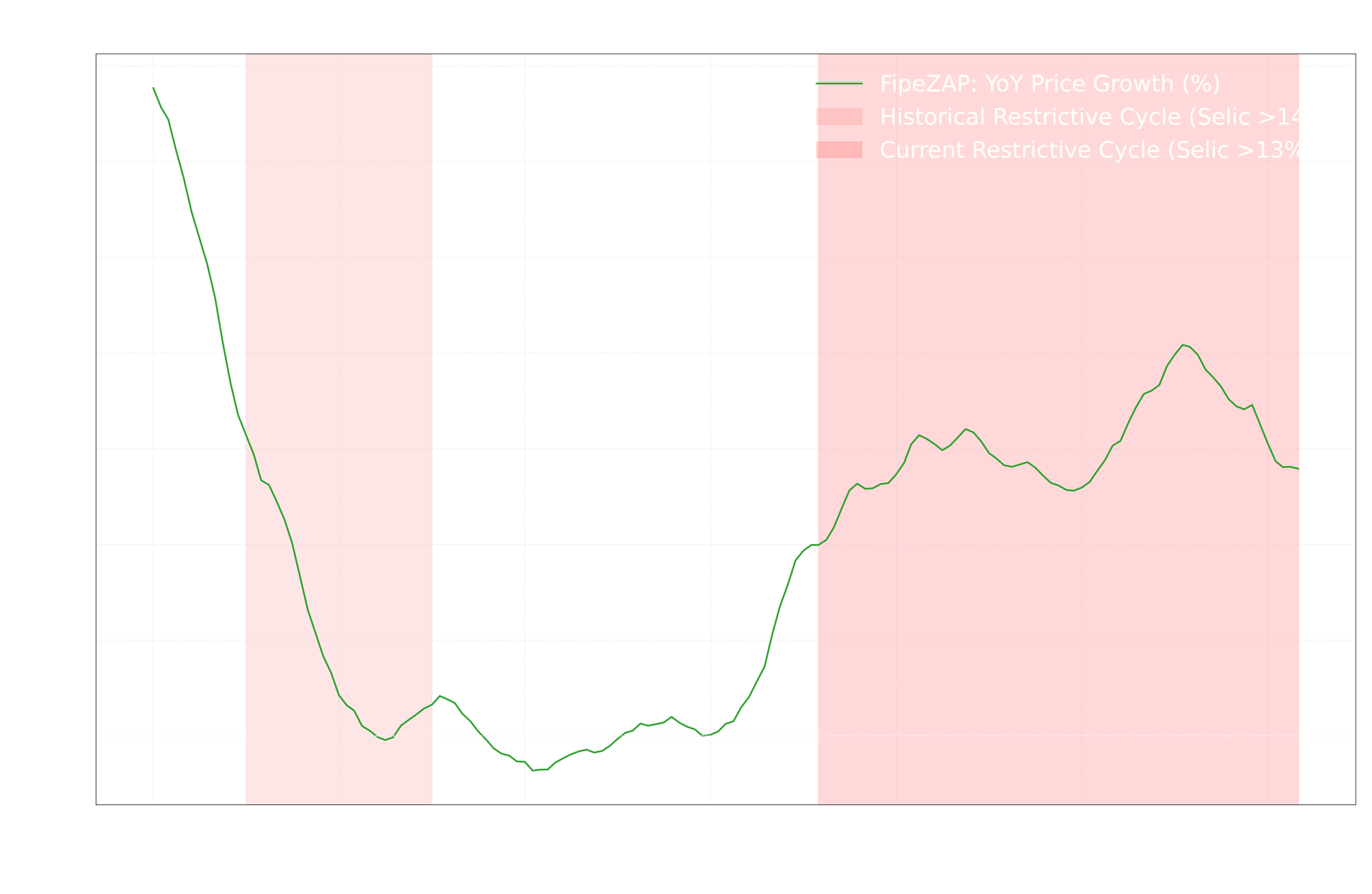
Figure 4: Real estate price resilience measured by the FipeZAP Index. The chart highlights the clear decoupling between the uninterrupted growth of market values and the current prolonged restrictive cycle (Selic > 13%).
1. Price Inelasticity and the Refutation of the “Drawdown”
The FipeZAP Index historical series refutes the hypothesis of a crash or prolonged stagnation of sales prices during Selic hiking cycles. Examining the current monetary tightening cycle (which began in March 2021 and remains in a restrictive phase in 2025-2026), the national index has not recorded the drawdown expected by standard models:
Structural Growth: From the beginning of the restrictive cycle (March 2021) to the first half of 2026, the FipeZAP index shows a cumulative appreciation of over 36%.
Sustained Annual Variation: Unlike the 2015-2017 restrictive cycle — where price inflation zeroed out, bordering on negative territory due to a deep systemic macroeconomic recession, severe GDP contraction, and a housing oversupply accumulated during the previous boom — the current post-2021 cycle has seen the 12-month variation stabilize in a robust expansion range, maintaining annual growth around 6%-7% despite the cost of money remaining firmly above 13%.
2. The Structural Pricing Floor
The empirical anomaly of a market appreciating in a double-digit rate regime is explained through the concept of the “Demographic Shield”. Brazil is in a period of maximum density for the young and adult population of first-time homebuyer age. This demographic pressure generates incompressible demand that clashes head-on with constrained supply, as the high cost of capital inhibits the opening of new construction sites by less capitalized developers. This chronic imbalance imposes an unbreakable pricing floor on nominal prices.
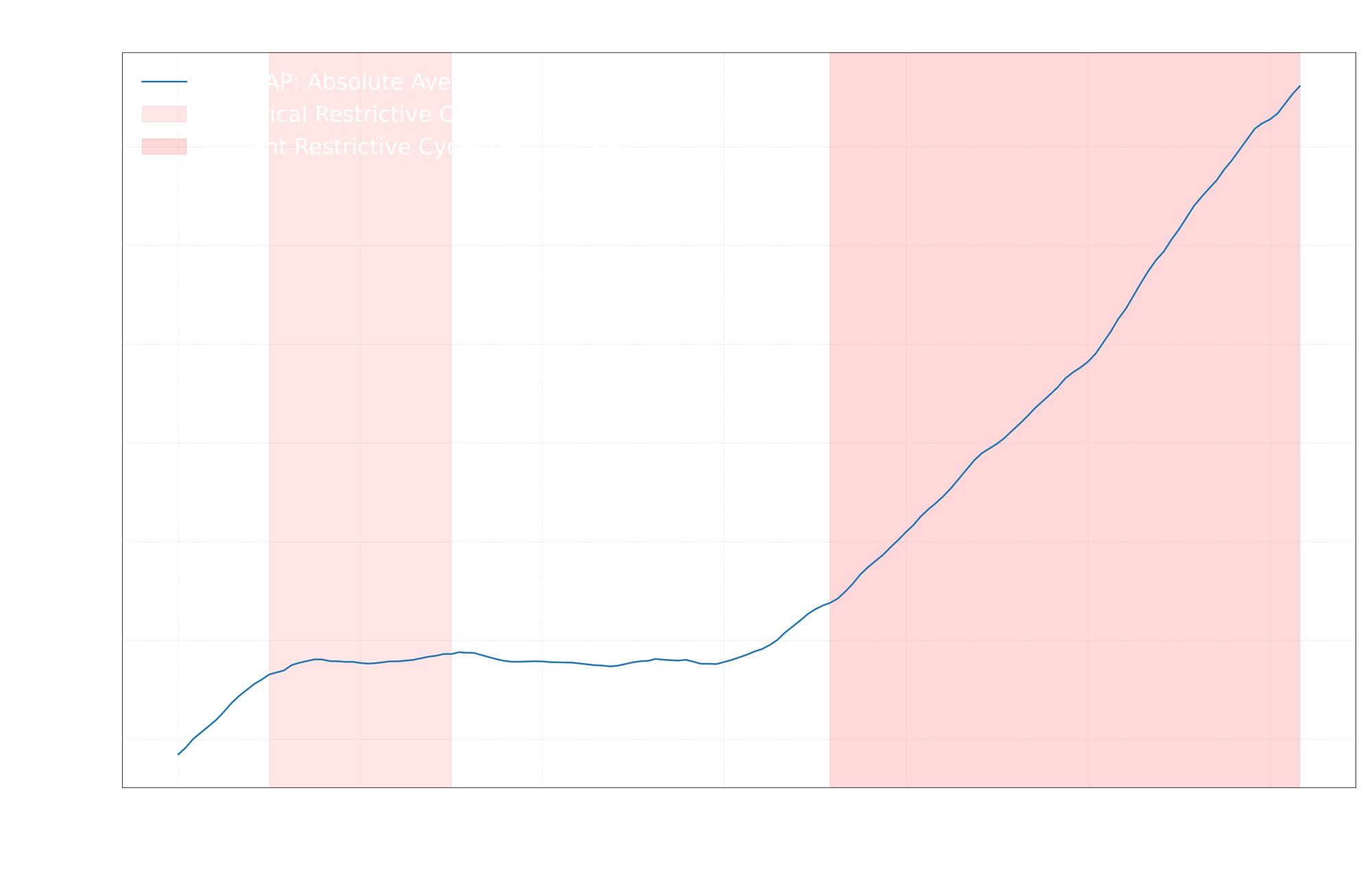
Figure 5: Absolute trend of the average sales price (R$/m²) measured by the FipeZAP Index. The chart demonstrates price inelasticity during the 2015-2017 crisis (where they stagnated but did not crash) and the vigorous upward acceleration of nominal values during the current Selic restrictive cycle.
OPERATIONAL IMPLICATIONS AND ASSET ALLOCATION
For sovereign wealth funds, European macro allocators, and Real Estate managers, this convergence of factors outlines a highly asymmetrical execution strategy:
Long-Bias on Social Developers: Maintain an overweight position in top-tier listed developers focused on the subsidized segment (MCMV). Their cash generation is decoupled from the Selic trap, supported by State-guaranteed balance sheet extensions and the constant flow of FGTS withdrawals.
Real Estate as a Protective “Hard Asset”: The behavior of the FipeZAP index certifies Brazilian residential real estate as a formidable capital protection instrument. The continuous growth of the nominal price curve guarantees a structural hedge against inflation and local currency volatility.
Absence of Systemic Price Risk: The constant demographic push and the shortage of residential supply block the formation of oversupply bubbles. Waiting for a generalized valuation crash (distressed pricing) to enter the market represents a misreading of the cycle.