The Engine of FipeZAP Real Estate Credit: Structural Dynamics of the Caderneta de Poupança (SBPE) and the High-Inflation Capital Flow Paradox
At a Glance
The Turning Point: After a prolonged period of capital flight driven by double-digit Selic rates, the Brazilian Caderneta de Poupança (Savings Account) recorded a positive net inflow of +R$ 2.3 billion in May 2026, reversing a multi-year negative trend.
Credit Explosion: Reinvigorated by this fresh, low-cost liquidity, the SBPE system (Sistema Brasileiro de Poupança e Empréstimo) granted R$ 17.17 billion in mortgages in May alone—a massive +51.5% Year-over-Year surge.
The Drivers: This counter-intuitive pivot amidst high interest rates is fueled by a return to positive real yields on savings, severe regulatory tightening (longer lock-up periods) on competing tax-free bonds (LCI/LCA), and the heavy tax burden on short-term CDI-pegged assets.
Market Impact: The reactivation of the 65% statutory mortgage allocation rule provides the banking system with the critical lending capacity needed to meet Brazil's inelastic demographic demand, offering strong empirical validation for the continued resilience and upward trajectory of the FipeZAP Real Estate Index.
The Caderneta de Poupança (Savings Account) is the most widespread savings instrument in Brazil and acts as the true structural financial engine of the primary and secondary real estate markets. Understanding its capital flows is fundamental to explaining real estate price trends, mortgage cycles, and periods of credit rationing.
Recent data released by the Brazilian Association of Real Estate Credit and Savings Entities (Abecip) confirms a crucial macroeconomic pivot for 2026: a robust expansion in SBPE (Sistema Brasileiro de Poupança e Empréstimo) mortgage lending, sustained by a trend reversal in Poupança deposits.
1. The SBPE System and the 65% Statutory Rule
In the Brazilian macro-financial system, the link between private savings and the real estate market is enshrined in law:
The 65% Statutory Rule: Banks that raise funds from citizens through the Poupança under the SBPE framework are statutorily mandated to allocate at least 65% of the total balance to finance the residential real estate sector (home purchases, construction, or mortgages).
Consequently, the Poupança functions as a massive, low-cost liquidity reservoir for the banking system:
When flows are positive (Captação Líquida Positiva): Banks have abundant, low-cost capital to lend for home purchases, boosting demand and supporting market values.
When flows are negative (Esvaziamento or Capital Flight): The 65% reservoir depletes. To continue granting credit, banks must tap into the private capital markets by issuing securities such as LCIs (Real Estate Credit Letters) or CRIs. These instruments carry a significantly higher funding cost, forcing lenders to raise mortgage interest rates for clients or reduce the Loan-to-Value (e.g., lowering the financiable quota from 80% to 60%).
The latest data from May 2026 highlights the onset of an expansionary phase: financing granted by the SBPE reached R$ 17.17 billion in the month of May alone, marking a +51.5% surge compared to May 2025 and representing the second-best historical result for this month. From January to May 2026, mortgage concessions reached R$ 76.5 billion (+23.9% YoY), translating into 229.1 thousand financed properties (+29.2% YoY).
2. The Remuneration Mechanism and the "Selic Spread"
The reason citizens withdraw or deposit billions of Reais from the Poupança depends on its yield mechanism, regulated by the Central Bank (BCB) at two different speeds based on the Selic Rate:
Selic Rate Scenario | Poupança Statutory Yield | Capital Flow Behavior |
Selic $\le$ 8.5% p.a. | 70% of the Selic Rate + TR (Taxa Referencial) | Positive Inflows: The yield gap compared to fixed-income market assets is minimal; citizens prefer the total tax exemption and liquidity of the Poupança. |
Selic $>$ 8.5% p.a. (Current Scenario: ~13.5%) | Fixed cap at 0.5% per month (6.17% p.a.) + TR | Capital Flight (Esvaziamento): Government bonds (Tesouro Selic) or bank securities (CDB 100% CDI) offer nearly double the nominal rates, triggering massive withdrawals from the SBPE circuit. |
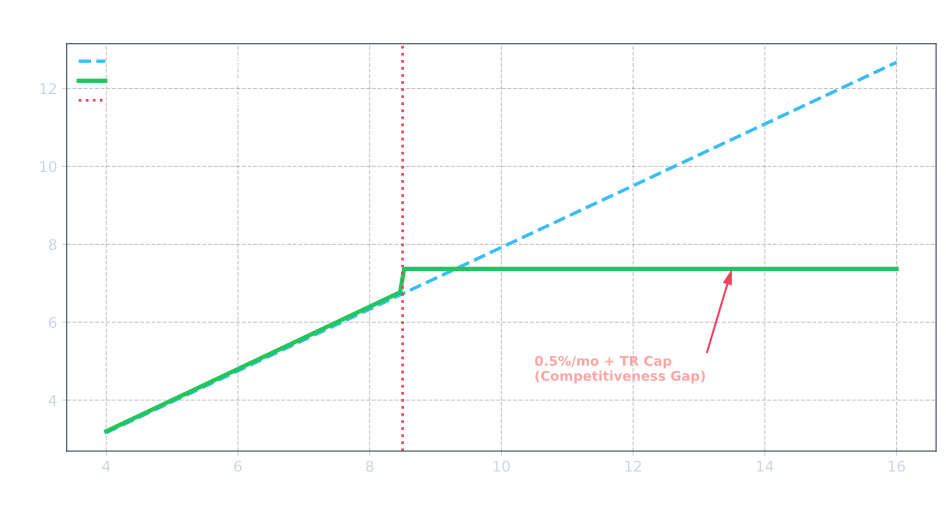
When the Selic Rate remains firmly above the 8.5% threshold for years (as seen between 2022 and 2025, with rates exceeding 13%), a prolonged hemorrhage of savings accounts toward the Tesouro Direto and liquid funds occurs, effectively reducing the availability of subsidized mortgages.
3. The May 2026 Paradox: Why Are Flows Turning Positive Amidst High Rates?
In May 2026, the Poupança recorded a positive net inflow of +R$ 2.3 billion (reversing the -R$ 128.6 million deficit of May 2025), pushing the total stock of the SBPE system to R$ 760.7 billion.
The return of savers to an investment yielding a nominal 6.17% (+ TR) during an economic environment with double-digit Selic rates is explained by a combination of four macro-financial and regulatory determinants:
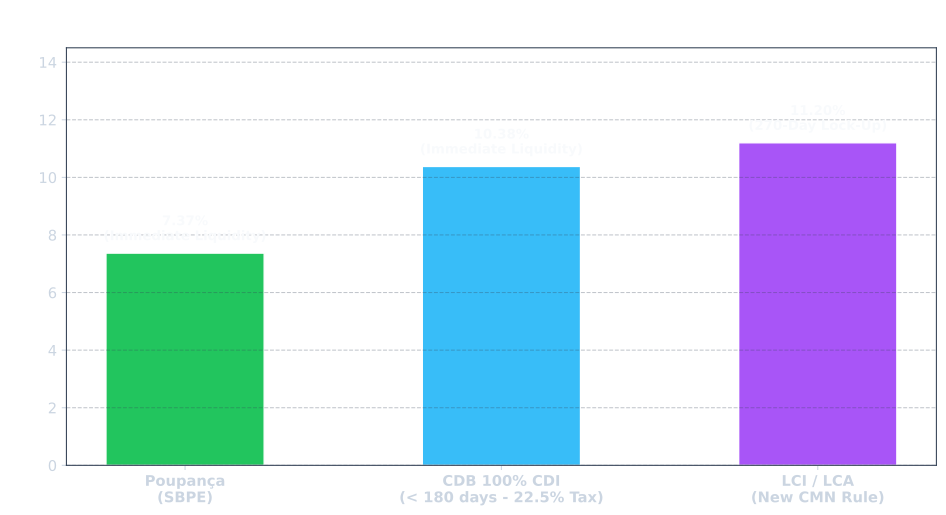
Return to Positive Real Yield: Although inflation is perceived as a risk, the stabilization of the nominal consumer price index (IPCA) at moderate levels means that the total yield of the Poupança (~7.37% including the TR) once again exceeds current inflation. When money stops eroding in real terms, the psychological urge to withdraw ceases.
The CMN Regulatory Tightening on LCI and LCA: This is the primary technical driver. Until recently, Real Estate and Agribusiness Credit Letters attracted enormous capital because they offered tax exemption (like the Poupança) and high rates with short-term constraints. The National Monetary Council (CMN) abruptly tightened the rules, raising the minimum lock-up period (carência) from 90 days to 9-12 months. Savers who require short-term liquidity have been forced to redirect their cash back to the Poupança.
Regressive Tax Impact (Imposto de Renda): Alternative securities pegged to the CDI (such as bank CDBs) are subject to a heavy withholding tax on short-term withdrawals (22.5% up to 180 days and 20% up to one year). Net of taxes, the effective yield gap compared to the Poupança (which is fully tax-exempt) narrows drastically for short-term liquidity horizons.
Risk Aversion and Wage Mass Growth: The resilience of the labor market in metropolitan areas has generated a larger wage mass for middle-class families, who allocate their cash reserves to the safest and most accessible transactional channel, fully guaranteed by the Credit Guarantee Fund (FGC).
4. Synthesis: Validating the FipeZAP Thesis
The reversal of SBPE flows provides the empirical backdrop for the expansion of price per square meter measured by the FipeZAP Index.
While the inelasticity of real estate demand—sustained by the continuous formation of new households (The Demographic Shield)—prevents a market crash during monetary tightening, the reactivation of low-cost SBPE liquidity provides the banking system with the lending capacity required to fuel a new cycle of real estate value expansion.