The Maginot Breach: US Treasury Shock and Brazil’s Rise as a "Neutral Safe".
THE CATALYST
The global financial architecture has reached a structural inflection point. The yield on the 30-year US Treasury bond has broken the 5% barrier—a critical level defined by Michael Hartnett, Chief Investment Strategist at Bank of America, as the "Maginot Line" of the market.
In practice, this means the global "risk-free" rate has drastically increased in cost. This movement acts as a global liquidity vacuum, draining capital from emerging markets and raising the cost of funding for all companies.
The data driving the shift:
US Producer Price Index (PPI) accelerated to 6% YoY (the fastest pace since 2022).
Consumer Price Index (CPI) remains resilient at 3.8%.
Traditional investment diversification has stopped working, requiring the long-term risk premium to be repriced globally.
DEEP DIVE (VARIANT PERCEPTION)
Market Consensus: Expects this shock to trigger a classic currency crisis in emerging markets, with a massive flight of foreign capital and systemic panic at the government level.
Our View (Variant Perception): The data proves the opposite. Brazil's vulnerability today does not lie with the government or the balance of payments. The real risk is confined to the real economy: the domestic corporate credit market. The imminent danger is the inability of local companies to refinance their operations.
The Exodus is Domestic, Not Foreign: The 2026 Anomaly International investors continue to believe in Brazil, sustaining stable capital focused on equities and structural private equity (R$ 6 billion in inflows up to March 2026). In fact, the 2026 macroeconomic and geopolitical landscape has transformed Brazil from a financial periphery into a "neutral safe." Amid geopolitical realignments under the Trump administration, tensions over strategic routes (like Greenland), and conflicts in the Middle East, non-aligned sovereign capital is actively evading US jurisdiction out of fear of asset freezes (a precedent established with Russia).
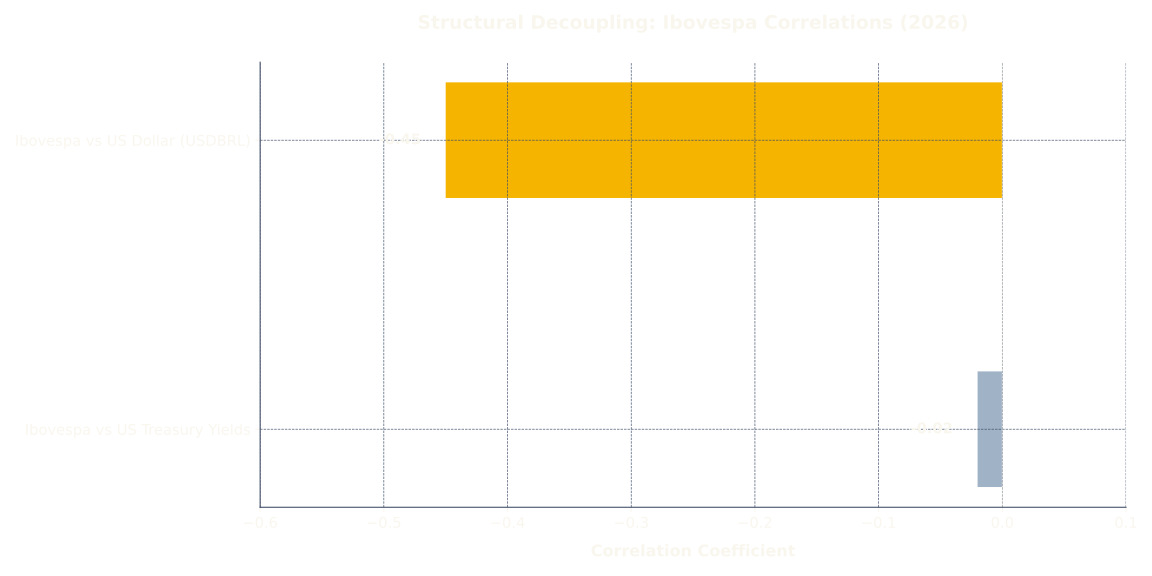
This historic reallocation has pushed the US Dollar into a decline of 3.7% against the Real (BRL) and propelled the Ibovespa to an all-time high of 178,858 points. This profound structural decoupling from North American assets is mathematically proven by historically low metrics:
Correlation Ibovespa vs US Treasury Yields: -0.02 (Statistical indifference: the Brazilian stock market has become structurally insulated from US debt shocks, proving that local equities no longer move in tandem with Washington).
Correlation Ibovespa vs US Dollar: -0.45 Correlation Ibovespa vs US Dollar: -0.45 (Moderate inverse relationship: while a globally strong dollar still creates expected headwinds, it no longer triggers the systemic equity crashes historically seen in emerging markets)
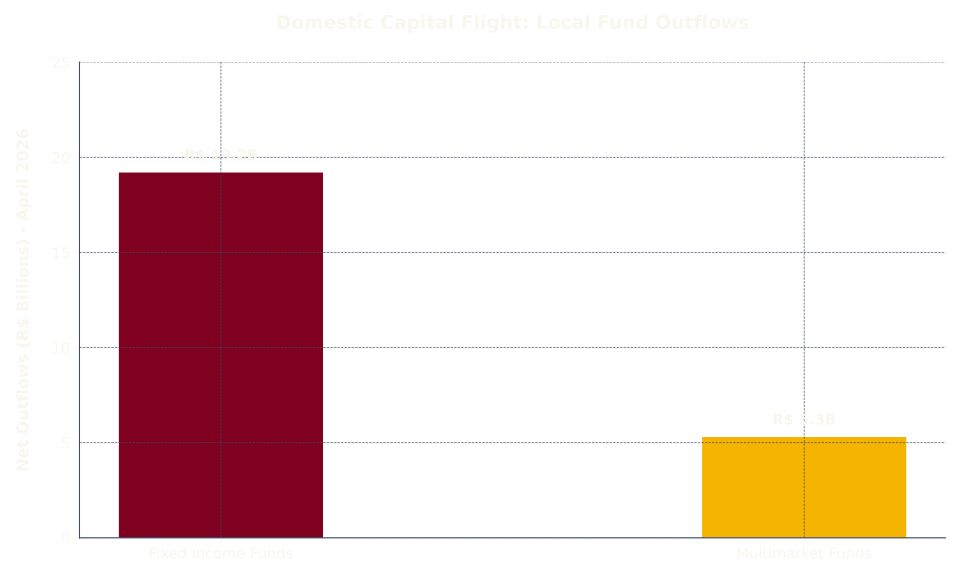
Despite this external shield, the destabilizing shock comes from within. The Brazilian market is experiencing a severe liquidity contraction driven by the local investors. In April 2026 alone:
R$ 19.2 billion were withdrawn from Fixed Income funds.
R$ 5.3 billion exited Multimarket funds.
The Crisis Transmission Dynamics: Pension funds and High Net Worth investors are not promoting capital flight or taking directional positions against the State's balance sheet. The movement is a classic domestic Flight to Quality: a massive liquidation of private credit positions (debentures) in favor of the institutional safety of National Treasury bonds. In practice, these players are rotating their portfolios to zero out their exposure to corporate credit risk (default risk), capturing an equivalent yield premium in the sovereign risk-free rate. It is precisely this risk arbitrage that drains liquidity from the secondary market and chokes the primary financing channel for the real economy.
Stable Exchange Rate: The Agribusiness Shield Despite the turbulence, the Exchange Rate (Dollar and Euro) remains anchored. Market projections point to USD/BRL at R$ 5.20 by the end of 2026. The robust trade surplus and high interest rates shield the currency. In other words: the impact of the crisis will not burst on the dollar; it will burst directly on the cost of credit for companies.
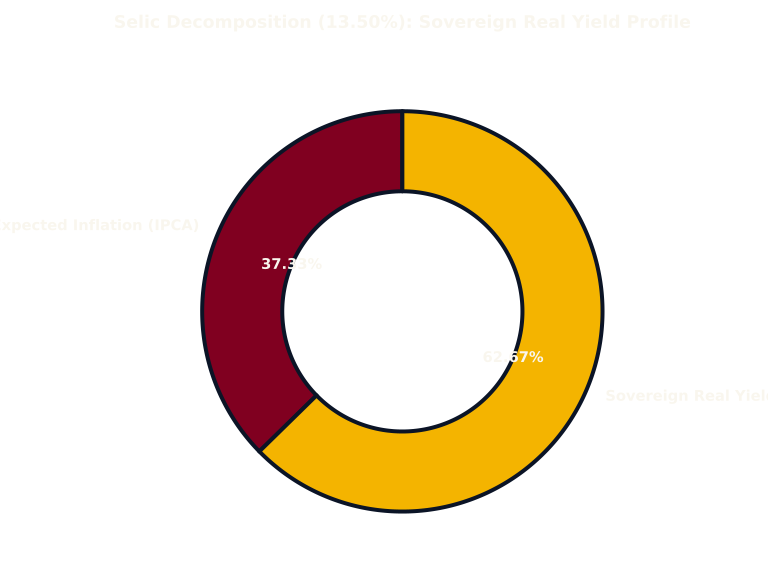
Monetary Paralysis (The Selic Trap) With US interest rates at 5% and domestic inflation showing signs of resistance (projected at 5.04%), the Central Bank of Brazil has lost its room to maneuver. Financial market projections (Focus Report) have repriced the terminal rate, pointing to a stagnant Selic at 13.50% at the end of the cycle. The hope for cheaper credit is gone, and the financial weight of this paralysis falls entirely on corporate balance sheets.
The Credit Freeze (Impact on Industry and Real Estate) Faced with the prospect of a Selic rate locked at 13.50% and with funds losing billions in liquidity, the debenture market (bonds issued by private companies to finance factories, construction, and expansions) has entered a state of paralysis.
Infrastructure and sanitation companies are being forced to offer punitive yields (above IPCA + 11% per year) to raise funds.
With the capital markets frozen, Real Estate and Industry companies are pushed toward traditional banks, which will charge extortionate emergency rates to release working capital.
IF/THEN BUSINESS & MARKET TRIGGERS
1. Cash and FX Management (For CFOs and Directors)
IF the US yield sustains 5% and the exchange rate remains stabilized around R$ 5.20...
THEN companies relying on imports/exports or holding hard-currency debt must lock in their FX protections (hedges). Working capital will be eroded by the prolonged maintenance of interest rates at this 13.50% level; do not add the risk of surprise exchange rate fluctuations to your operation.
2. Strategic Positioning and M&A
IF withdrawals from local funds continue, the refinancing market will remain blocked.
THEN steer clear of companies or partners with high leverage and exclusive dependence on domestic retail. The prohibitive cost of debt (the projection of a 13.50% Selic combined with extremely high credit spreads) will crush margins.
3. Treasury and Investment Management
IF inflation forces the Central Bank to signal high interest rates indefinitely...
THEN avoid locking the company's cash in long-term assets or fixed rates. The top priority is liquidity: concentrate resources in post-fixed investments (pegged to the CDI), issued exclusively by top-tier banks.
TAKEAWAYS: TAIL RISKS & SILVER LININGS
This scenario is not a systemic apocalypse; it is a structural movement of capital reallocation. The market configuration restricts the operations of credit-dependent entities but consolidates the position of liquid agents.
The Tail Risks (Systemic Risks):
The Refinancing Wall: The primary systemic risk is the inability of leveraged companies to roll over their debt. Infrastructure and real estate projects may stall due to a lack of funding.
The Return of Pricing Power to Banks: Corporations, with restricted access to capital markets, will resort to the balance sheets of major banks. Expect the imposition of tougher guarantees (covenants) and financing rates that will compress operating margins.
The Silver Linings (Strategic Opportunities):
Consolidation and M&A Dynamics: Highly capitalized companies, particularly within the export sector, will be optimally positioned to acquire over-leveraged competitors at highly attractive valuation multiples. The credit contraction effectively accelerates sector consolidation in favor of cash-rich entities.
Banking Sector Profitability: As corporate borrowers migrate from the frozen capital markets back to traditional credit lines, top-tier financial institutions will directly benefit from the expansion of lending spreads and wider net interest margins (NIM).
Sovereign Real Yields: For institutional capital allocators, the combination of anchored inflation expectations (around 5%) and a terminal Selic rate locked at 13.50% provides a sovereign risk-free real yield exceeding 8% per annum, positioning it among the most competitive globally.