The Reconfiguration of the 6x1 Labor Scale: Economic Impacts and Brazilian Productivity Dynamics
THE CATALYST
The Brazilian formal economy, structurally dependent on a constitutional 44-hour workweek distributed across six days, is undergoing a material regulatory shift. Impact assessments indicate that 35.7 million formal workers, representing 62% of the CLT (formal labor code) workforce, currently operate within this specific framework.
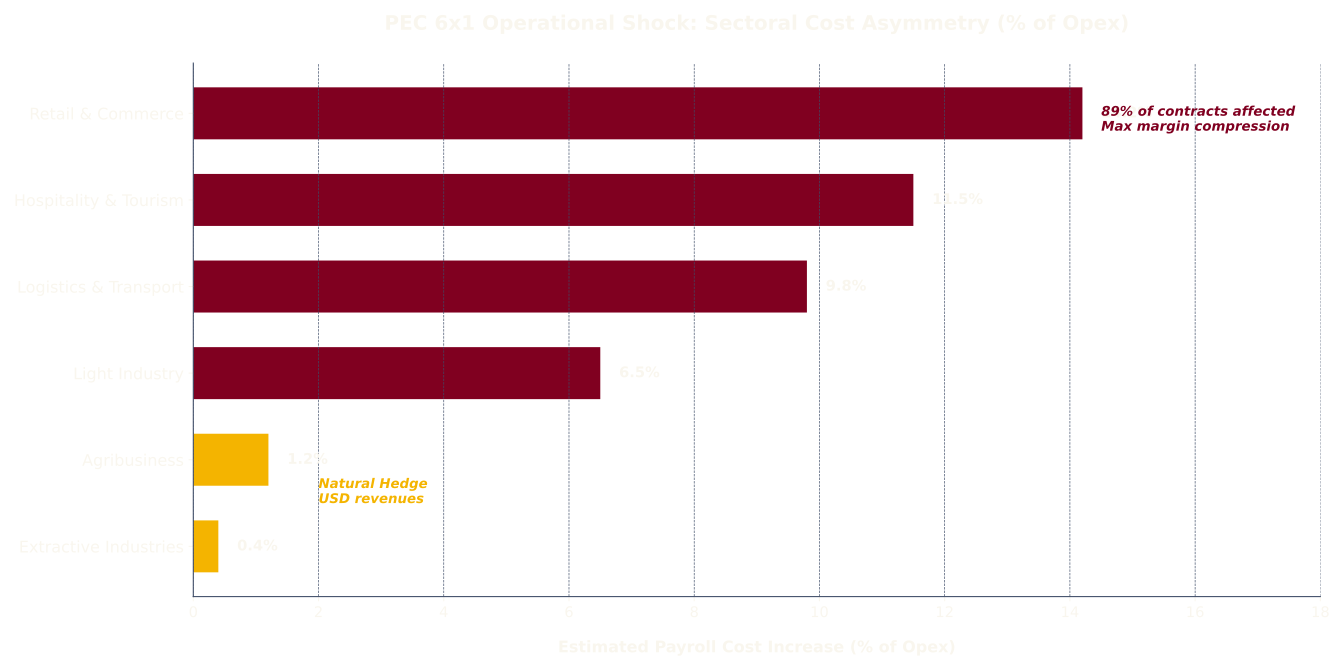
On May 27, 2026, the Chamber of Deputies approved the constitutional amendment (PEC) that abolishes the 6x1 scale in two rounds of voting, with a highly expressive 461 favorable votes in the second round. The approved text dictates a transition model: the implementation of the two-day weekly rest and a reduction to 42 hours will take effect 60 days after promulgation, followed by a final reduction to the 40-hour ceiling over a period of 14 months. The text, which explicitly forbids any salary reductions, now proceeds to the Senate for constitutional review. This dynamic suggests a complex operational reorganization for retail, where 89% of contracts follow this scale, and industry, constraining their capacity to operate continuously without incurring material overtime premiums.
DEEP DIVE
Brazil represents a persistent outlier in the global financial matrix, governed by the interest rate differential between the Selic trajectory and developed market curves. The European Central Bank maintains an accommodative stance with the deposit facility rate at 2.00%, while markets price an 89.0% probability of a marginal hike to 2.25% in June 2026. Conversely, the Brazilian Central Bank holds the Selic rate at a restrictive 14.50% to anchor domestic inflation. Current projections from the Focus Report indicate the IPCA ending the year at 4.92%, breaching the 4.5% upper limit of the target, leading median market estimates to position the terminal Selic rate for 2026 at 13.25%.
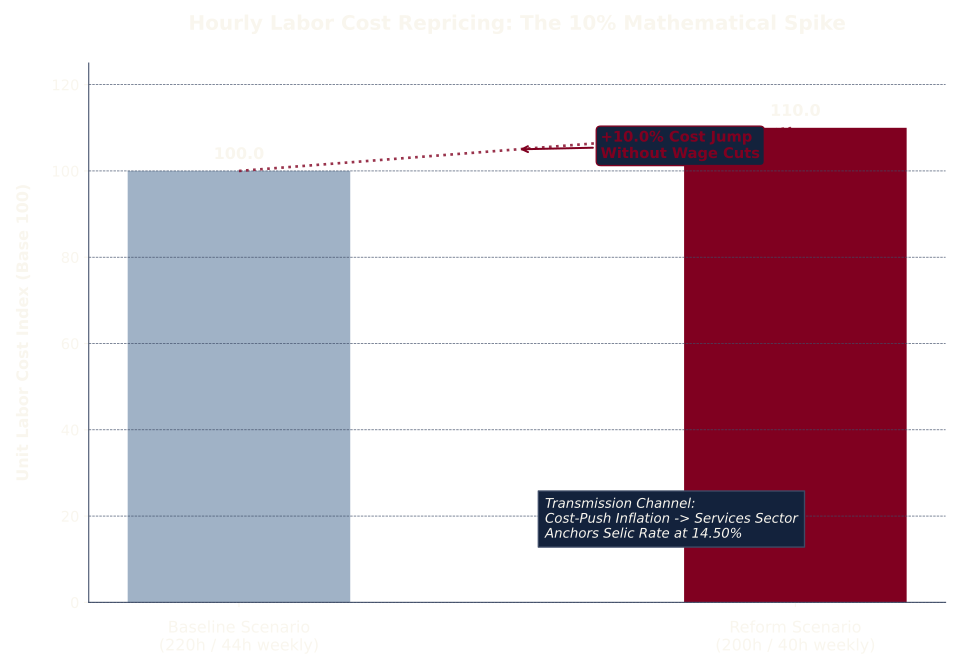
The legislative imposition of a 5x2 scale without nominal wage adjustments indicates a direct repricing of the unitary hourly cost. An empirical simulation demonstrates that compressing a 220-hour monthly contract to 200 hours without corresponding wage cuts mathematically elevates the hourly baseline cost by 10%. Extrapolating this microeconomic adjustment, econometric models estimate a macro-systemic impact of R$ 158 billion on national payrolls.
Source: FecomercioSP RAIS 2024 Projections.
To maintain analytical objectivity, it is necessary to price the positive externalities mapped by heterodox frameworks. The reduction of the 6x1 scale could mitigate burnout rates and lower hidden absenteeism costs, as employers fully fund the first 15 days of medical leave. Furthermore, labor institutions hypothesize a Keynesian demand shock driven by forced structural hiring to cover vacant shifts. However, isolating causality from correlation indicates that maintaining the same nominal wage with an extra rest day does not grant additional purchasing power to low-income workers; their real income may contract due to cost-push inflation. The projected consumption shock relies entirely on the premise of express formal hiring, a probability challenged by the restricted liquidity of small and medium enterprises, which suggests informal labor substitution or pejotização (mass transition to contractor status) as a more likely outcome.
BUSINESS & MARKET IMPLICATIONS
Duration and Yield Curve: The spread between Brazil's 14.50% and the ECB's 2.00% suggests material risk-adjusted returns. Asset allocation should actively overweight top-tier banking LCI and LCA (Letras de Crédito Imobiliário e do Agronegócio). These tax-exempt instruments offer real yields pegged to the CDI, indicating a robust protection profile. Nominal returns comfortably absorb the premiums required for FX hedging derivatives (Non-Deliverable Forwards) on the BRL/EUR pair, isolating the yield from currency volatility.
Sector Rotation: The regulatory shift imposes an active underweight positioning on domestic cyclical equities within the B3 index. Retail conglomerates, logistics, and hospitality sectors may absorb the bulk of the R$ 158 billion Opex shock, a dynamic that suggests an express compression of operating margins and EPS downgrades.
Commodities and Export Flows: The optimal equity allocation requires an overweight position in extractive industries and agribusiness. Operating under continuous-cycle agreements and generating USD-denominated revenues, these assets offer a natural hedge against domestic wage inflation and BRL depreciation, capitalizing on the projected 2.0% GDP expansion driven primarily by these sectors.
TAKEAWAYS & TAIL RISKS
The progression of the PEC in the Senate, where political factions may attempt to reintroduce fiscal compensation amendments (such as the previously debated FGTS cut), which could represent a material sovereign tail risk.
The operational adaptation during the 60-day and 14-month transition windows, which may trigger preemptive price adjustments in the services and retail sectors.
The transmission of the R$ 158 billion cost adjustment to the IPCA within the Services Sector, an event that may anchor the Selic rate at 14.50% and limit the space for monetary easing in 2026.
The expansion of pejotização and informal labor flows, verifiable through upcoming CAGED data, serving as a leading indicator of operational stress in the domestic retail sector.
Recent polls showing that 56% of the population opposes the reform if it involves wage cuts, a factor that politically solidifies the irreducibility clause and transfers the entire cost to corporate margins.